


One Touch magnetic card holders are a popular way to display valuable trading cards without grading them. Their clear construction, rigid profile and magnetic closure make them especially appealing for sports cards, Pokémon, Magic: The Gathering, Yu-Gi-Oh! and other TCG collections. But collectors often ask a different question: do One Touch magnetic holders actually block UV light?
Some do advertise UV-blocking materials. The important distinction is that UV protection is product-specific, and the existence of a clear magnetic holder does not automatically establish how much ultraviolet radiation reaches the card.
This guide explains One Touch UV protection, how to interpret manufacturer claims and when an outer acrylic trading card display frame adds value. For a broader explanation of wavelengths, UV filtering and display glazing, see our complete guide to UV protection for trading card display frames.
What is a One Touch magnetic trading card holder?
A One Touch-style holder is a rigid two-piece case that closes magnetically. It is commonly used for cards collectors want to handle less often while still being able to remove or replace them without submitting them for professional grading.
Magnetic card holders are available in different thicknesses to accommodate standard TCG cards, thick sports memorabilia cards and other formats. A 35pt holder and a much deeper holder for a patch card are not interchangeable in frame design.
One Touch is strongly associated with Ultra PRO's product range, but collectors also use the term casually for other magnetic card cases. That makes checking the exact brand and model particularly important.
Do Ultra PRO One Touch holders block UV rays?
Ultra PRO describes UV-blocking additives in products across its ONE-TOUCH holder range. Its stated purpose is to help protect the card from ultraviolet exposure while the rigid case also limits direct handling.
That is a real product feature. It should not be turned into an invented percentage for every One Touch model unless the manufacturer provides the relevant test data. A description saying a holder contains UV-blocking additives is different from a graph showing transmission at 320, 350, 380 and 400 nanometres.
Collectors should read the product listing for the exact holder being purchased, including its size, material information and any published UV specification.
Are all magnetic trading card holders UV protective?
No universal specification applies to every magnetic card holder on the market. Different brands may use different clear plastics, additives, finishes and constructions. Even within a brand, product families may have different stated features.
The fact that a holder looks clear, feels thick or has a magnetic closure tells you very little about its spectral UV transmission. A product with no published UV information should not be assigned the same filtration rating as a separately tested UV-filtering product.
This matters if a collector is combining Ultra PRO One Touch cases with generic magnetic holders inside the same display frame.
How ultraviolet light can affect a card inside a holder
UV radiation can contribute to light-driven changes in inks, dyes, coatings and other materials. A protective case may reduce transmission of certain UV wavelengths, but the total display environment still matters.
Sunlight includes visible light as well as ultraviolet radiation, and visible light can contribute to fading. This is why the Canadian Conservation Institute recommends managing both light intensity and duration, not relying solely on UV filtration.
For a valuable holographic Pokémon card, signed sports card or rare One Piece alternate art, a holder is one layer in the display strategy rather than permission for continuous direct sunlight.
What does UV-blocking mean in a magnetic card holder?
UV performance is often described using wavelengths in nanometres (nm). The UVA band extends towards 400 nm, close to visible violet light. Two holders might both be advertised as UV-resistant while reducing different portions of the spectrum.
A precise comparison requires more than a percentage without context. Ideally, the manufacturer's data should explain which wavelengths were tested and how much light passed through. In the absence of that detail, treat broad UV claims as useful product descriptions rather than laboratory-equivalent ratings.
Can a One Touch holder stop trading cards fading?
A holder with UV-blocking additives can reduce some UV exposure, but it cannot make a card completely immune to fading. Visible light, heat, total exposure time and the card's specific printing materials remain relevant.
Different cards may have different fading behaviour. A Magic: The Gathering foil, a vintage sports autograph and a Disney Lorcana enchanted card should not be assumed to have identical light sensitivity simply because each fits in a magnetic case.
The practical aim is to reduce avoidable exposure while keeping the card available to enjoy.
One Touch holders versus PSA, BGS and CGC slabs
Magnetic holders and graded slabs solve overlapping but different problems. A One Touch holder offers rigid, reopenable protection. PSA, BGS and CGC slabs provide professional grading and encapsulation as well as a rigid exterior.
Neither category should be given a universal UV rating by assumption. Ultra PRO publishes UV-blocking descriptions for specific One Touch products; grading holder generations and manufacturer statements vary.
| Holder type | Primary role | UV information to check |
|---|---|---|
| UV-advertised One Touch | Rigid, removable magnetic protection | Exact model's UV features and any spectral data |
| Other magnetic card case | Rigid, removable protection | Whether the manufacturer specifies UV filtration at all |
| PSA graded slab | Professional grading and encapsulation | Holder generation and documented material properties |
| BGS or CGC slab | Professional grading and encapsulation | Actual holder specification rather than label assumptions |
For a dedicated comparison of grading holders, see Are PSA, BGS & CGC Graded Slabs UV Protected?.
Does an acrylic display frame add UV protection to One Touch holders?
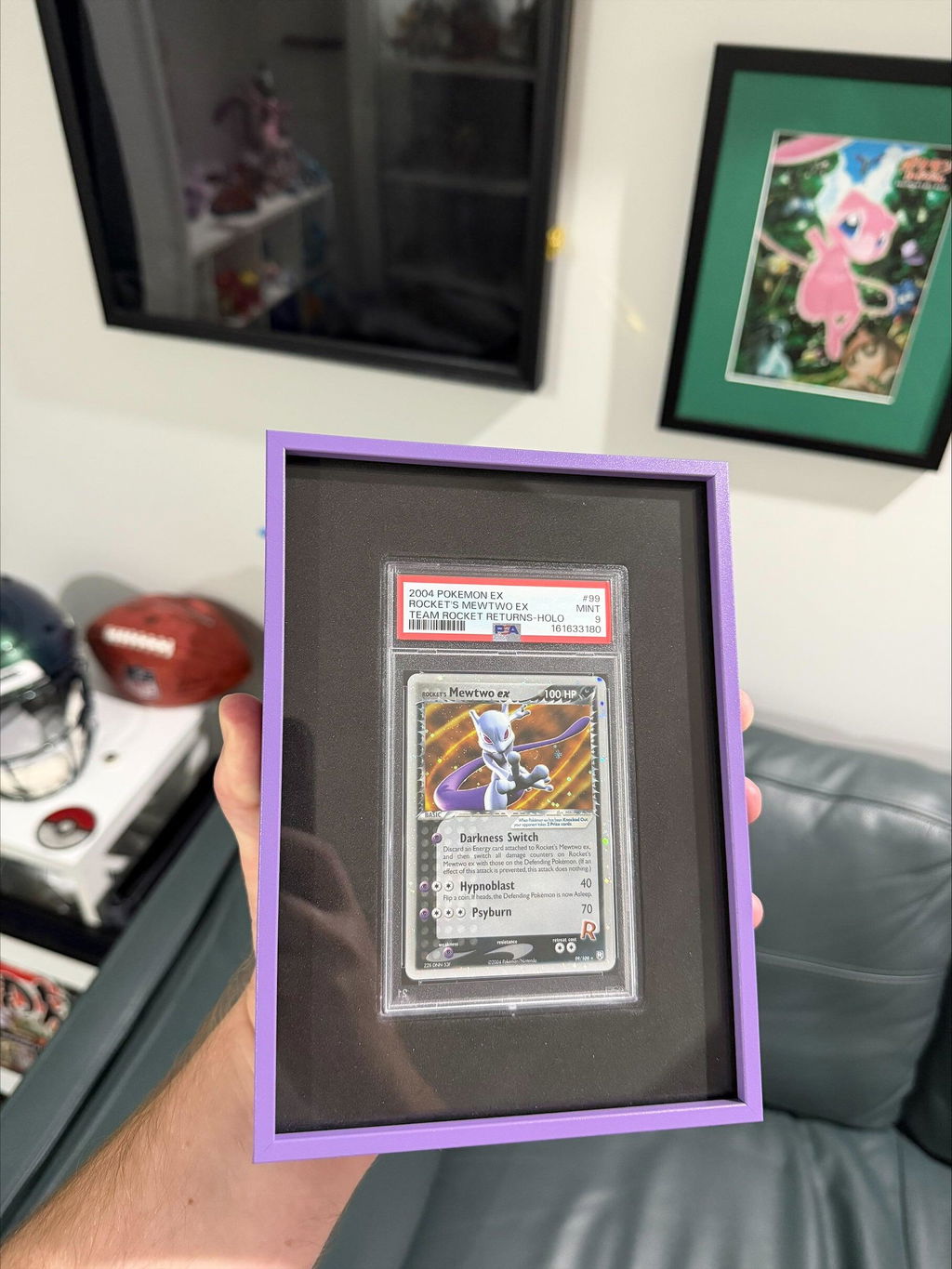
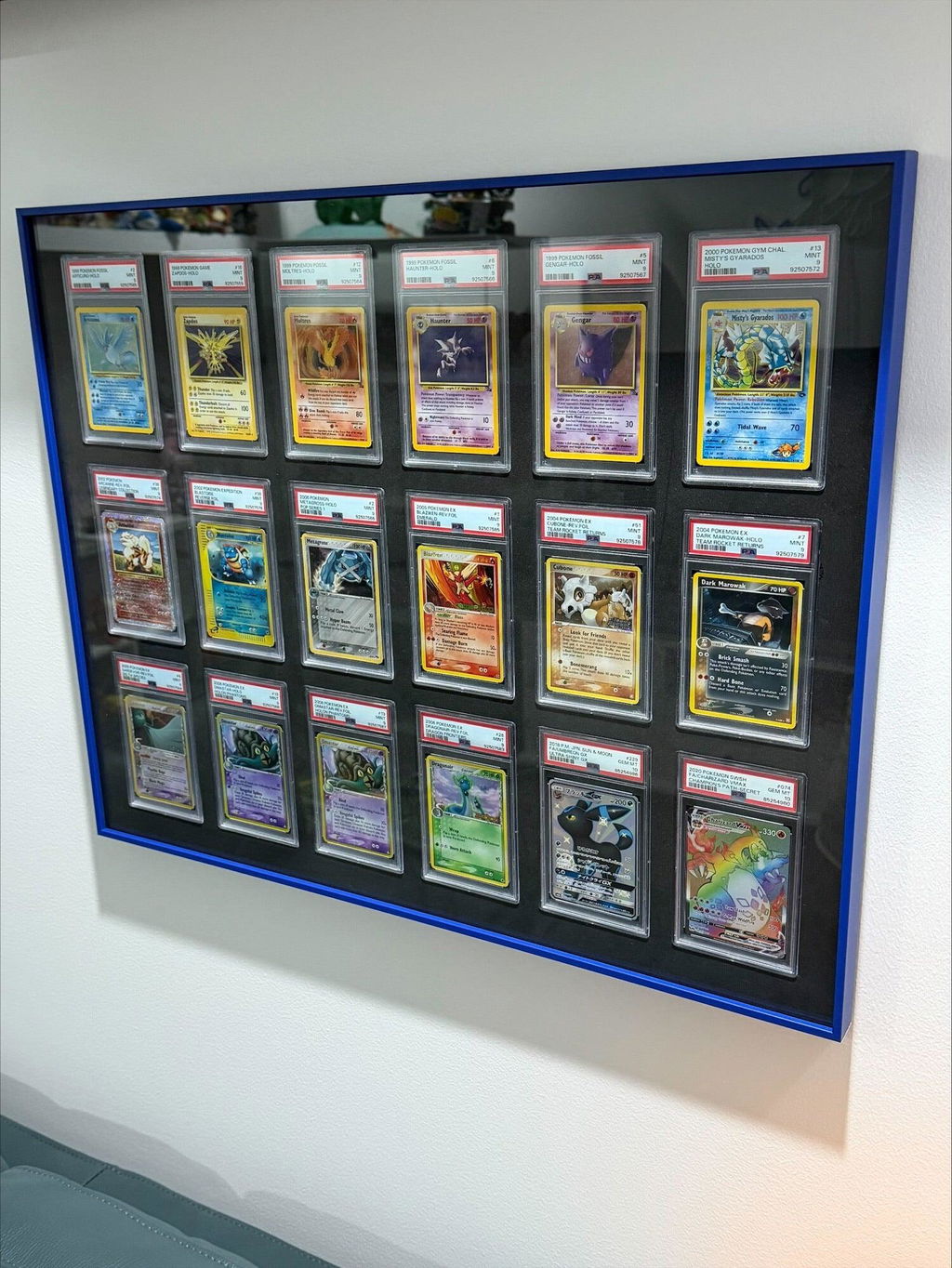
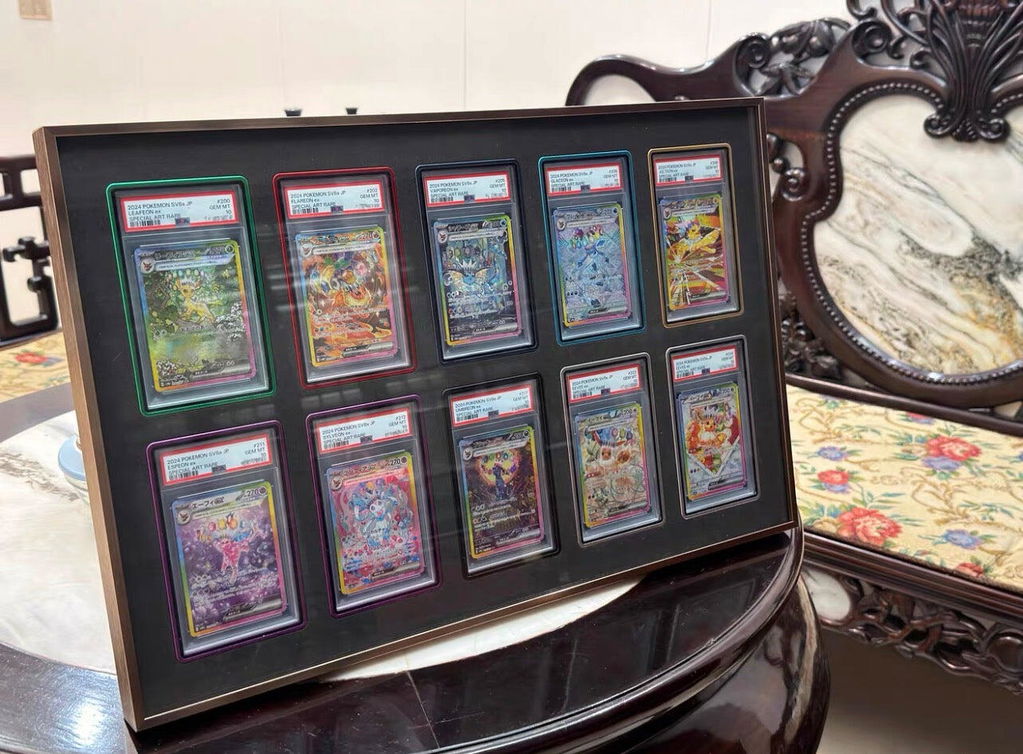
It can. A trading card wall display frame may place a continuous acrylic or glass sheet in front of several One Touch magnetic holders. If that front panel has documented UV-filtering properties, it supplies a separate filtering layer before light reaches the magnetic cases.
The combined result depends on the properties of both layers. It is not correct to add their advertised UV percentages together or claim that layering them guarantees no fading.
Outer glazing also changes glare, weight and the way the collection looks as a group. Those visual and mechanical benefits are separate from the UV rating.
UV-resistant acrylic versus museum-grade glazing for One Touch displays
Acrylic grades differ. Some offer useful filtering in shorter UV wavelengths, while specialist conservation acrylic may cover a broader range towards 400 nm. Museum-grade anti-reflective materials can also reduce visible reflections.
That reflection control is relevant because a One Touch card display has at least two clear surfaces in front of the artwork: the magnetic holder and the frame glazing. Strong window or LED reflections can appear on both.
Choose glazing based on the actual material specification, room conditions and desired finish. Specialist material is an optional enhancement, not a universal requirement for all One Touch displays.
Is acrylic or glass better for a magnetic card display frame?
Acrylic is lighter and generally more impact-resistant than ordinary glass, which becomes useful when displaying many magnetic holders on one wall. Glass is typically harder and more scratch-resistant.
Both materials are available with different UV-filtering and anti-reflective properties. The choice should account for frame size, physical support, optical appearance and documented filtration rather than assuming one material name guarantees higher protection.
Why sunlight through a window is still a concern
A card inside a One Touch holder can still receive intense daylight when displayed opposite a window. Ordinary windows filter some incoming UV, but visible light continues through and parts of the ultraviolet spectrum can remain.
Observe the wall in morning and afternoon light before mounting a display. A wall may be shaded when the frame is installed yet receive direct sunlight at another time of day or season.
Moving the display away from a sunny window can be a straightforward improvement, regardless of the case and glazing materials.
Can LED lighting affect cards in One Touch holders?
Many modern LEDs emit relatively little UV, but their visible light still contributes to cumulative exposure. A softly illuminated display used occasionally is different from an intensely lit wall left on every hour.
One Touch surfaces can also reflect LED strips and spotlights. Consider diffused lighting and test viewing angles with the actual magnetic case behind the final glazing.
The wider issue is explored in our guide to LED lighting and trading card fading.
One Touch display frames for Pokémon, MTG, Yu-Gi-Oh! and One Piece
One Touch magnetic holders are popular because they present an ungraded card cleanly while making it easy to change the collection. A Pokémon illustration set might use matching magnetic cases; a Magic: The Gathering collection may focus on foils or favourite artists; Yu-Gi-Oh! and One Piece collectors may prioritise especially striking artwork.
Sports card displays often involve thicker cases for autographs and memorabilia. Disney Lorcana and other TCG collections may use standard-size magnetic cases.
In every case, the actual holder dimensions, display placement and glazing specification are more useful than assuming different trading card games require completely different UV technology.
Choosing a One Touch holder and frame together
- Confirm the trading card's thickness and the correct magnetic holder size.
- Check whether the exact One Touch model specifies UV-blocking materials.
- Measure the holder's outside width, height and depth before choosing a frame.
- Select outer acrylic or glass based on its documented UV and optical properties.
- Choose a wall away from prolonged direct sunlight.
- Test reflections and lighting with the actual holder in position.
- Keep access practical so cards can be changed without forcing the holder out.
Common misconceptions about One Touch UV protection
- Every magnetic holder blocks the same amount of UV. Materials and published claims differ.
- Thicker plastic always means stronger UV filtration. Formulation and tested wavelengths remain essential.
- A UV-rated magnetic case makes sunlight harmless. Visible light and heat still matter.
- Two UV-rated layers can simply have their percentages added. Combined transmission needs wavelength-specific information.
- Anti-reflective glazing and UV filtration are identical. They address different parts of display performance.
Frequently asked questions
Do Ultra PRO One Touch magnetic holders block UV?
Ultra PRO advertises UV-blocking additives in parts of its ONE-TOUCH range. Check the exact holder's product information for its stated features.
Is a One Touch UV holder safe in direct sunlight?
Direct sunlight is best avoided for valuable trading cards, even when the holder offers UV-blocking properties.
Does a magnetic card holder prevent Pokémon cards from fading?
It can reduce some risks, but fading depends on the card's materials and total light exposure. No magnetic holder should be assumed to eliminate every cause.
Can I put One Touch holders behind UV-resistant acrylic?
Yes. An outer display frame can have its own UV-filtering acrylic while holding magnetic cases behind it.
Do One Touch holders offer more UV protection than PSA slabs?
A reliable numerical comparison needs equivalent test data for the exact products. A general claim about UV additives should not be treated as a universal ranking.
Is museum-grade glass necessary for One Touch displays?
Not necessarily. A documented clear acrylic and sensible indoor placement may suit many collectors; specialist glazing offers additional properties when desired.
Final thoughts
One Touch magnetic card holders are a practical way to present ungraded trading cards, and UV-blocking materials are a genuine feature of certain products. The exact holder specification, rather than its appearance or thickness, determines what can reasonably be said about filtration.
For a wall display, consider the magnetic holder, outer acrylic or glass, room lighting and placement together. That approach works for Pokémon, MTG, Yu-Gi-Oh!, One Piece, Lorcana and sports card collections without turning UV protection into a single marketing number.
Continue Exploring
Explore these related collector resources for further guidance on holders, acrylic and display-frame construction.
📚 Collector Guides
-
UV Protection for Trading Card Display Frames
The complete guide to ultraviolet filtration, acrylic and glass. -
How to Make a One Touch Trading Card Wall Display
Plan frame depth, magnetic holder fit and wall display construction. -
How to Make a Trading Card Wall Display
Compare holders, frame materials, layouts and DIY approaches.
🛒 Shop Display Collections
-
One Touch Wall Display Frames
Purpose-built display frames for magnetic trading card holders. -
Aluminium Trading Card Wall Display Frames
Explore premium aluminium displays for a range of holder formats.

0 comments