


When choosing a trading card display frame, acrylic and glass are often presented as a simple choice between two clear materials. In reality, the decision affects weight, impact resistance, scratches, reflections, UV filtration and how practical a large display will be to mount.
Collectors comparing acrylic versus glass for trading cards often want to know which blocks more UV light, which looks clearer over PSA graded slabs and whether museum-grade glazing is worth considering. The answer depends on the exact products, not only whether they are made from acrylic or glass.
This guide compares both materials specifically for Pokémon, sports cards, Magic: The Gathering, Yu-Gi-Oh!, One Piece, Lorcana and other trading card game (TCG) displays. For the full science of wavelengths and ultraviolet filtration, see our UV protection guide for trading card display frames.
Acrylic versus glass: the quick comparison
| Feature | Acrylic | Glass |
|---|---|---|
| Weight | Generally much lighter at comparable thickness | Heavier, especially across large panels |
| Impact resistance | More impact-resistant than ordinary glass | Can break or shatter depending on type |
| Scratch resistance | More easily scratched without special treatments | Ordinary glass is generally harder |
| UV protection | Varies from general clear to specialist UV-filtering grades | Varies from ordinary glass to conservation UV-filtering grades |
| Reflections | Clear, matte and anti-reflective options | Clear and anti-reflective options |
| Large wall displays | Lower weight can be a significant advantage | Greater mass affects transport and mounting |
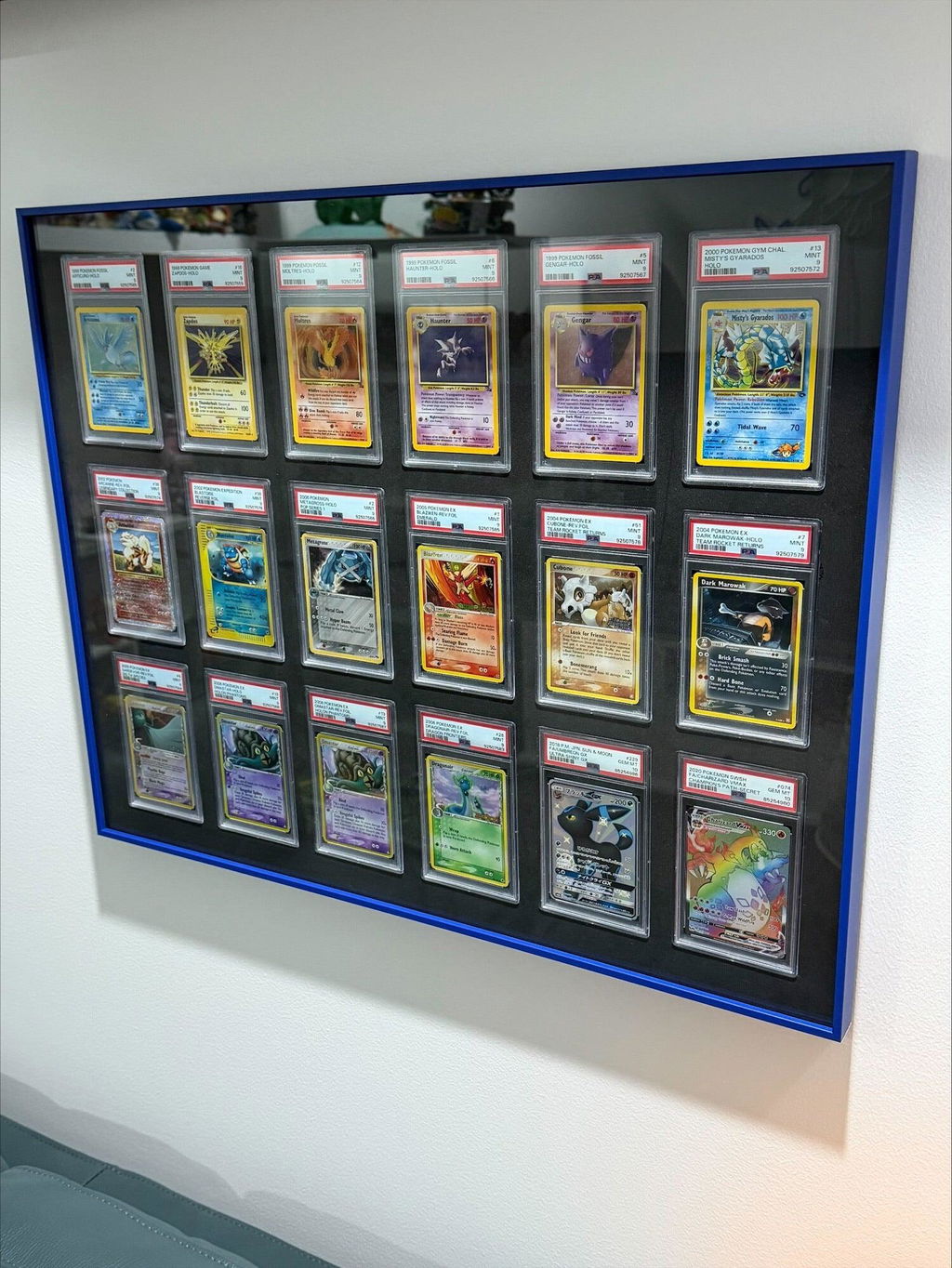
Neither material is universally superior in every category. For a single framed card, glass can be perfectly practical. For a 36- or 54-card graded slab wall, acrylic's weight advantage becomes much more relevant.
What is acrylic glazing?
Acrylic glazing is usually a transparent sheet based on polymethyl methacrylate, or PMMA. It is commonly used as a lighter alternative to traditional glass in picture frames, display cabinets and collectible displays.
Acrylic can be manufactured in different grades, including clear general-purpose sheet, UV-filtering material and specialist anti-reflective products. These grades should not be treated as having identical ultraviolet transmission.
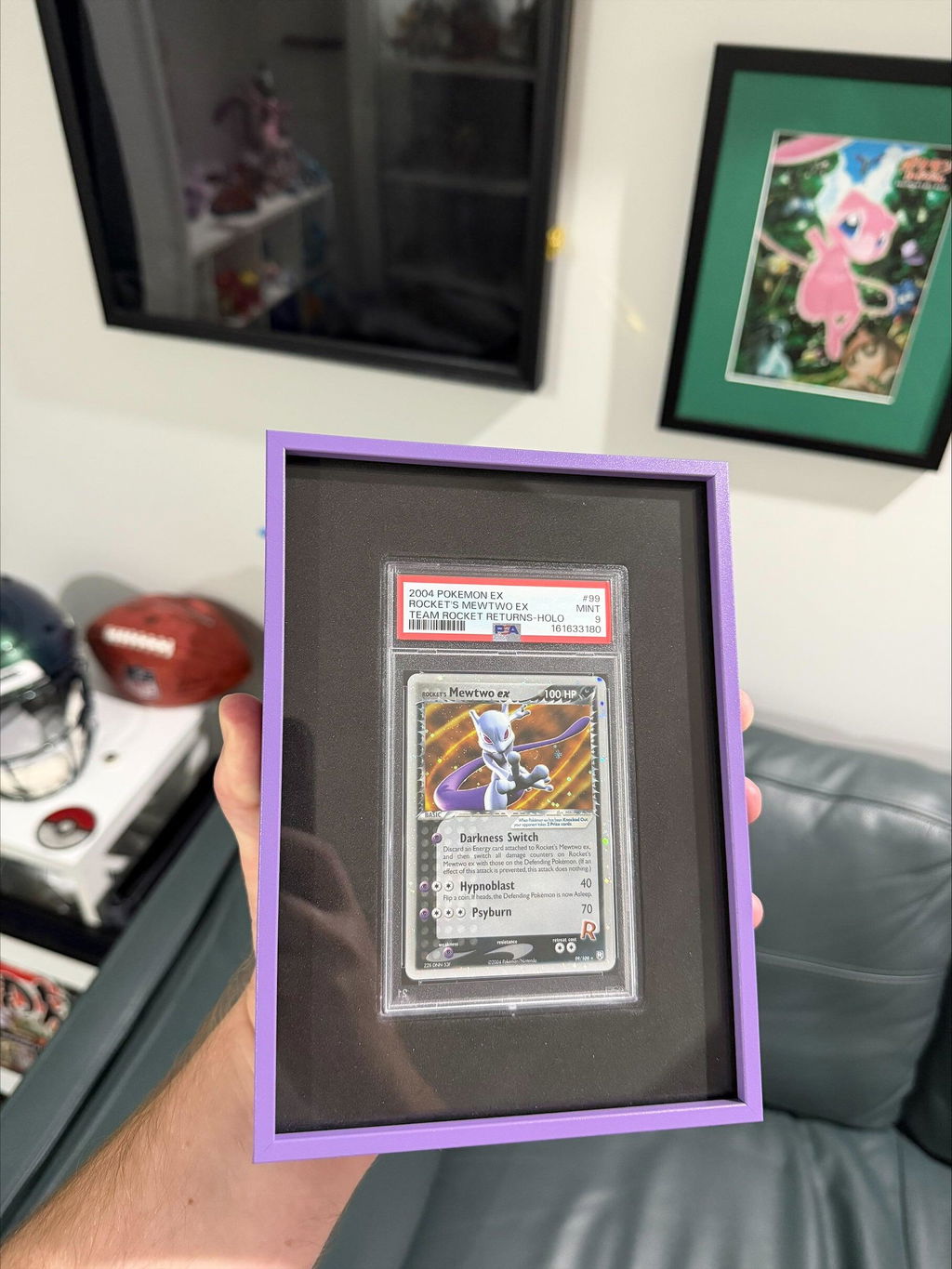
For trading card displays, a clear acrylic front can cover a single One Touch holder or a large grid of PSA, BGS and CGC graded slabs.
What is glass glazing?
Traditional picture glass is widely used because of its clarity, hardness and familiar appearance. Specialist conservation glass can be designed to filter more ultraviolet light, while anti-reflective glass reduces visible reflections.
Ordinary glass is not equivalent to museum glass. The Canadian Conservation Institute's guidance on framing glazing explains why different glazing materials need to be assessed by their actual UV-filtering properties.
For a small graded trading card frame, glass may be a straightforward option. As the sheet becomes larger, its weight and breakage characteristics become more important.
Which blocks more UV light: acrylic or glass?
The precise grade matters more than the material name. Ordinary glass, regular acrylic, UV-resistant acrylic, conservation glass and museum-grade acrylic do not all filter the same wavelengths.
Some acrylic products reduce shorter UV wavelengths strongly. Specialist acrylic or glass can be engineered to filter a much broader portion of the ultraviolet band. No accurate blanket percentage applies to every acrylic or every glass panel.
When comparing two materials, request the wavelength range, percentage transmission and thickness tested. A claim of 99% UV protection is most meaningful when the manufacturer identifies the test conditions and spectral range.
Understanding UVA, UVB and acrylic filtration
Ultraviolet radiation is generally discussed in three bands. UVC is effectively filtered from natural ground-level sunlight by the atmosphere. UVB covers approximately 280–315 nm, while UVA extends roughly from 315 to 400 nm.
A material that blocks below approximately 330 nm does not necessarily filter most of the longer UVA wavelengths. A specialist product advertised as filtering UV towards 400 nm is making a different technical claim.
That difference matters whether the display contains a raw Pokémon card, an MTG foil in a magnetic case or an entire wall of PSA graded slabs.
Why visible light matters even with UV glass
UV radiation is not the only light that can contribute to fading. The visible spectrum can also affect sensitive inks, dyes and printed materials. A card behind high-performance UV-filtering glass or acrylic still receives visible light, because seeing the artwork requires that light to pass through.
The Library of Congress recommends managing both light intensity and duration when displaying sensitive collection items. For trading card collectors, avoiding strong direct sunlight remains useful regardless of the glazing material.
No acrylic-versus-glass decision should be treated as permission to put a valuable card beside a sunny window indefinitely.
Weight: why acrylic becomes attractive for large slab frames
Weight is often a minor consideration for a single trading card. It becomes important when a display grows to 16, 25, 36, 54 or more cards and the front panel spans a substantial wall area.
Acrylic is generally lighter than glass at a comparable thickness, making large sheets easier to handle and reducing the mass added to the finished frame. The slabs, insert, backing and outer frame still have weight of their own.
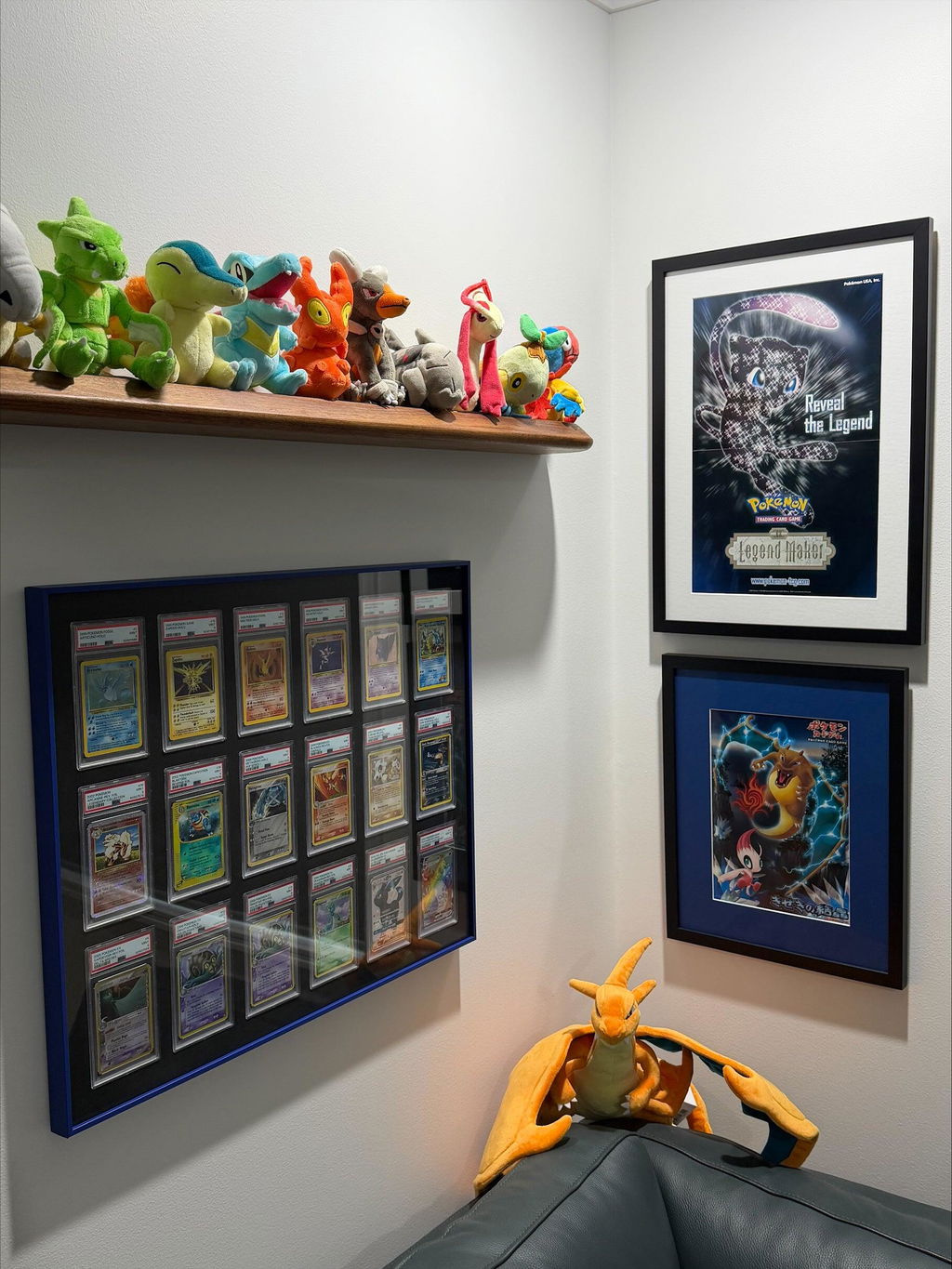
That is one reason acrylic is often a practical choice for multi-grid aluminium trading card display frames, especially those holding PSA, CGC or BGS slabs.
Impact resistance and breakage
Acrylic is generally more resistant to impact than ordinary picture-frame glass. That can be valuable during transport, installation and everyday handling of a large frame.
Glass can break, and its behaviour depends on the exact type. Specialist glazing systems exist, but an ordinary large sheet of glass introduces breakage considerations that acrylic does not share in the same way.
Impact resistance is not an invitation to treat acrylic roughly. It can still crack, scratch or flex if handled or supported incorrectly.
Scratch resistance and everyday cleaning
Ordinary glass is generally harder than acrylic and often easier to keep free of fine scratches during routine cleaning. Acrylic requires a little more care, especially when dust is present on the front.
Use cleaning methods recommended for the specific product. Abrasive cloths and unsuitable cleaners can damage clear acrylic or specialised anti-reflective surfaces.
On a large TCG display, fine surface marks may become more noticeable when light strikes the sheet at an angle. Maintaining the glazing matters to the visual finish, regardless of its UV rating.
Optical clarity: can you see trading cards better through glass?
Both high-quality acrylic and glass can provide excellent clarity. The visual result depends on the sheet's light transmission, surface finish, reflectance and the spacing between the glazing and the cards.
It is easy to confuse low reflection with high clarity. A material may transmit plenty of visible light but still show distracting reflections from windows, LED strips or room lighting.
This is particularly relevant when displaying graded slabs. The viewer looks through the frame front and another clear surface on the PSA, BGS or CGC holder.
Anti-glare and anti-reflective are not always the same
Some non-glare acrylic is made with a diffuse or matte surface that softens sharp reflections. Depending on the distance between the sheet and card, that finish can also soften the view of fine text or artwork.
Specialist anti-reflective coatings aim to reduce mirror-like reflections while preserving a crisp view through the glazing. These options may be available in both acrylic and glass.
When choosing for holographic Pokémon cards, MTG foils, One Piece alternate art or graded sports cards, test the actual holder and viewing distance behind the material rather than buying by the phrase “non-glare” alone.
Does acrylic thickness improve a trading card display?
Thickness affects a panel's rigidity, weight and handling. A small display may use a relatively thin sheet, while a wide unsupported span can need a different specification.
A thicker sheet of ordinary acrylic is not automatically equivalent to conservation-grade UV-filtering acrylic. Material formulation and tested wavelength performance still matter.
For a large graded slab wall, ask a plastics supplier about sheet thickness and support requirements for the actual span.
Cast versus extruded acrylic for display frames
Cast and extruded acrylic are common manufacturing categories with differences in tolerances, machining behaviour and available grades. Both can be suitable for trading card display glazing.
Neither word is a complete UV-protection specification. Compare the actual product data sheet, including UV transmission and optical properties, instead of assuming every cast sheet provides museum-grade protection.
Museum-grade acrylic versus museum glass
Specialist museum glazing products are developed for applications where optical presentation and material protection are priorities. Some offer high UV filtration, reduced reflectance or both.
A museum-grade acrylic may be appealing for a large display because it combines specialist optical performance with lower weight. Museum glass may suit a smaller frame where its hardness and traditional feel are preferred.
The correct comparison is between named products and their specifications. “Museum-grade” is not a guarantee that every product on the market has identical properties.
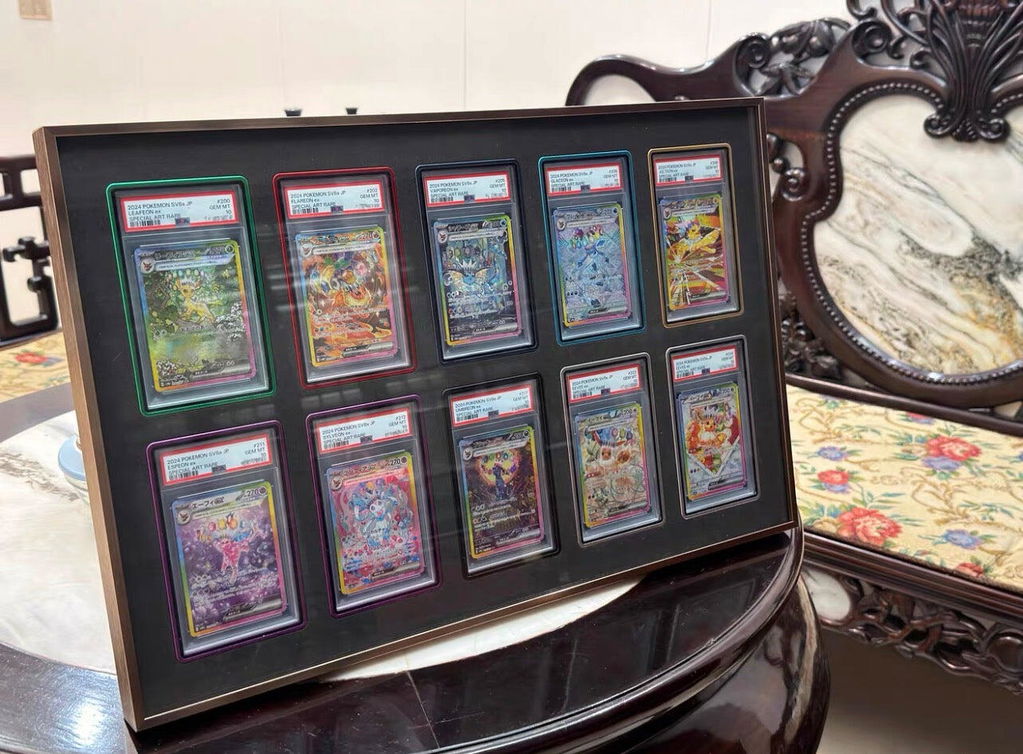
What works for PSA, BGS and CGC graded slabs?
Graded slab displays need depth and internal support regardless of the front material. The insert and backing should carry the holders, rather than relying on the acrylic or glass to hold slabs in position.
For a large PSA or CGC wall frame, weight and panel support often favour acrylic. For a single BGS slab, a conventional glass frame can be entirely practical. Both options can use UV-filtering grades.
If UV performance of the slabs themselves is a concern, see our guide to PSA, BGS and CGC slab UV protection.
What works for One Touch magnetic card holders?
One Touch holders create another reflective layer behind the frame front. Both acrylic and glass can work, provided the frame is deep enough and the insert supports the magnetic cases securely.
Many Ultra PRO One Touch products advertise UV-blocking additives, but that claim belongs to the holder. The outer display glazing should still be evaluated separately for its own UV filtration and reflectance.
Our One Touch UV protection guide covers the holder-specific questions.
Displaying Pokémon, Yu-Gi-Oh!, Lorcana and other TCGs
There is no universal rule that a Pokémon display must use acrylic while a Yu-Gi-Oh! or Disney Lorcana collection must use glass. Card artwork, frame size, holder format and wall conditions matter more than the game name.
A foil-heavy Magic: The Gathering collection may place extra importance on reflections. A large One Piece graded slab display may benefit from lighter glazing. A compact sports autograph display may suit specialist glass. These are presentation choices, not game-specific UV laws.
When glass may be the better choice
Glass can be attractive for small or medium frames where its weight is manageable and scratch resistance is important. Traditional picture-framing finishes and certain specialist optical products may also influence the choice.
It is worth considering when the display is unlikely to move frequently and the frame structure is designed for the finished weight.
When acrylic may be the better choice
Acrylic often makes sense for larger trading card walls, lightweight framing and displays that need to be transported or reopened. Its impact resistance and lower weight are practical advantages.
Collectors can choose from general clear sheet, documented UV-filtering products and specialised anti-reflective acrylic, depending on their requirements.
Five questions to ask before choosing glazing
- What is the finished frame size and glazing span?
- Does the display contain raw cards, One Touch magnetic holders or graded PSA/BGS/CGC slabs?
- What are the UV wavelength and transmission specifications?
- Will reflections from windows or LEDs affect the view?
- How much weight can the frame and wall mounting safely accommodate?
Frequently asked questions
Does acrylic block more UV than glass?
It depends on the grades being compared. Ordinary and specialist products have different transmission curves, so material names alone do not establish a winner.
Is acrylic safer than glass for large graded card displays?
Acrylic is generally lighter and more impact-resistant than ordinary glass, which can make large displays easier to handle.
Is museum glass necessary for Pokémon cards?
Not universally. The card's value, display location, lighting and glazing specification should guide the choice.
Does UV-resistant acrylic prevent all card fading?
No. Visible light and other environmental conditions can also contribute to deterioration.
Will anti-reflective acrylic make holographic cards easier to see?
It can reduce distracting reflections, although the result depends on the particular product and viewing setup.
Is acrylic suitable for a 36- or 54-card PSA slab frame?
Yes, subject to choosing the correct thickness and support for the panel span. Its lower weight is often an advantage.
Do glass and acrylic need different cleaning methods?
Yes. Acrylic generally needs gentler cleaning, and specialist coatings may have their own care instructions.
Final thoughts
Acrylic versus glass is not a competition with one universal winner. For trading card display frames, acrylic offers lower weight and greater impact resistance, while glass offers hardness and familiar framing qualities. Both can be selected in specialist UV-filtering and anti-reflective grades.
For a collector displaying Pokémon, sports cards, MTG, Yu-Gi-Oh!, One Piece or Lorcana, the most reliable choice follows the actual frame size, holder type, room conditions and product specifications. Clear comparisons are more valuable than broad assumptions about either material.
Continue Exploring
Explore these related guides to UV filtration and trading card display design.
📚 Collector Guides
-
UV Protection for Trading Card Display Frames
Understanding wavelengths, acrylic specifications and ultraviolet filtration. -
How to Make a Trading Card Wall Display
The complete DIY guide to holders, materials, inserts, layouts and mounting. -
How to Choose a Trading Card Display Frame
Compare frame styles and practical requirements for different card collections.
🛒 Shop Display Collections
-
Aluminium Trading Card Wall Display Frames
Explore aluminium frames for graded and ungraded trading cards. -
PSA, CGC & BGS Graded Slab Wall Display Frames
Display collections in purpose-built graded card wall frames.

0 comments